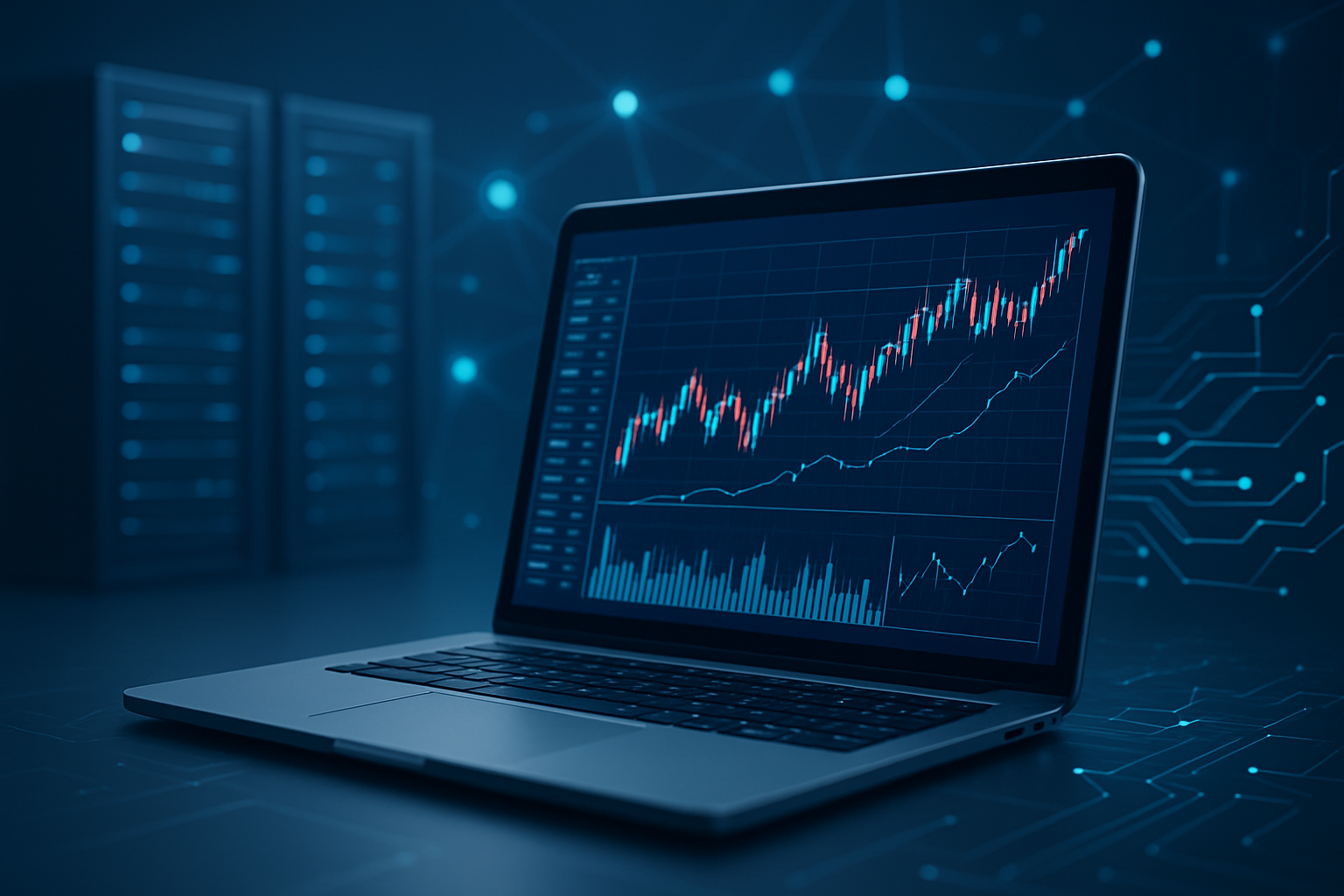
Forex trading has become increasingly dependent on digital technology, allowing traders to monitor currency markets, analyze price movements, and manage positions through organized online environments. For traders who want a practical workspace, the MT4 Trading Platform offers a range of tools that can support market observation, technical analysis, and structured trading decisions.
What’s Covered
- Forex Market Monitoring
- Advanced Charting Tools
- Order Management
- Customizable Workspace
- Risk Management Features
- Learning and Practice
- Conclusion
Forex Market Monitoring
The foreign exchange market operates continuously during major global trading sessions, creating frequent price movements across currency pairs. Traders need access to clear market information to observe these changes and identify conditions that may be relevant to their strategies.
A well-organized trading platform can make monitoring more convenient by bringing prices, charts, watchlists, and account information into one workspace. Traders can select instruments they want to follow and arrange market information according to their preferred routine.
Advanced Charting Tools
Charts are among the most important tools for forex analysis. They allow traders to examine historical and current price movements and develop a clearer understanding of market behavior.
Different timeframes can be used to study short-term fluctuations and broader trends. Traders may compare several timeframes to understand whether a movement is temporary or part of a larger pattern.
Technical indicators can provide additional information about momentum, volatility, and potential trend changes. These tools can support analysis when used alongside careful observation, but they cannot predict future prices with certainty.
Order Management
Another essential feature of a modern forex environment is order management. Traders may need to open, modify, monitor, and close positions according to their individual strategies.
Different order types can be useful for different trading situations. Market orders may be used when immediate execution is preferred, while pending orders can help traders establish conditions for potential entries.
Understanding how orders work is important because market prices can change rapidly. Execution may also be influenced by volatility, liquidity, and other market conditions. Traders should therefore understand the functions available before using them with real funds.
Customizable Workspace
Every trader has different preferences when analyzing financial markets. Customization can help users create a workspace that matches their individual approach.
Charts, watchlists, indicators, and other information can be arranged to keep frequently used tools accessible. A well-organized workspace may reduce unnecessary distractions and make regular market monitoring more efficient.
Traders who follow several currency pairs can also organize their preferred instruments so that important information remains easy to locate.
Risk Management Features
Trading tools are valuable, but responsible risk management remains essential. Forex markets can experience rapid price changes, and leverage can increase both potential gains and potential losses.
Traders should understand position sizing, margin requirements, leverage, and protective order functions before entering trades. Establishing clear risk limits can help prevent individual positions from creating excessive exposure.
Maintaining a trading journal can also support better decision-making. Reviewing previous trades may reveal recurring patterns, emotional decisions, or weaknesses in an existing strategy.
Learning and Practice
Using a trading platform effectively requires familiarity with its tools and functions. New traders can benefit from learning how charts, indicators, order types, and account information work before committing substantial funds.
Practice can help users become more comfortable with the trading environment. It can also provide an opportunity to develop a consistent process for analyzing markets and managing positions.
Continuous learning is equally important because market conditions can change over time. Traders should regularly review their methods and adjust their approach when necessary.
Conclusion
The MT4 Trading Platform provides essential tools for modern forex trading, including market monitoring, chart analysis, order management, customization, and risk-control functions. These capabilities can help traders create an organized environment for studying currency markets and managing their trading activities.
Technology can make market participation more efficient, but it cannot guarantee successful results. Knowledge, discipline, planning, and responsible risk management remain important for every trader. By understanding available tools and using them carefully, users can develop a more structured approach to modern forex trading.
The Short Version
- Forex trading relies heavily on digital technology to facilitate monitoring of currency markets and position management.
- The MT4 Trading Platform offers tools for market observation, technical analysis, and structured trading decisions.
- Charts are crucial for forex analysis as they help traders examine historical and current price movements across different timeframes.
- Order management features on trading platforms allow traders to open, modify, and close positions based on individual strategies and market conditions.
- Effective risk management is essential in forex trading, necessitating an understanding of position sizing, margin requirements, and protective order functions.
- Continuous learning and practice are important for traders to become familiar with trading tools and adapt to changing market conditions.